About All Tours Offroad ToursFrom Palm Springs ToursSelf-Guided Audio ToursHiking ToursRock Climbing Tours Directions Hours & Fees
Find Tours 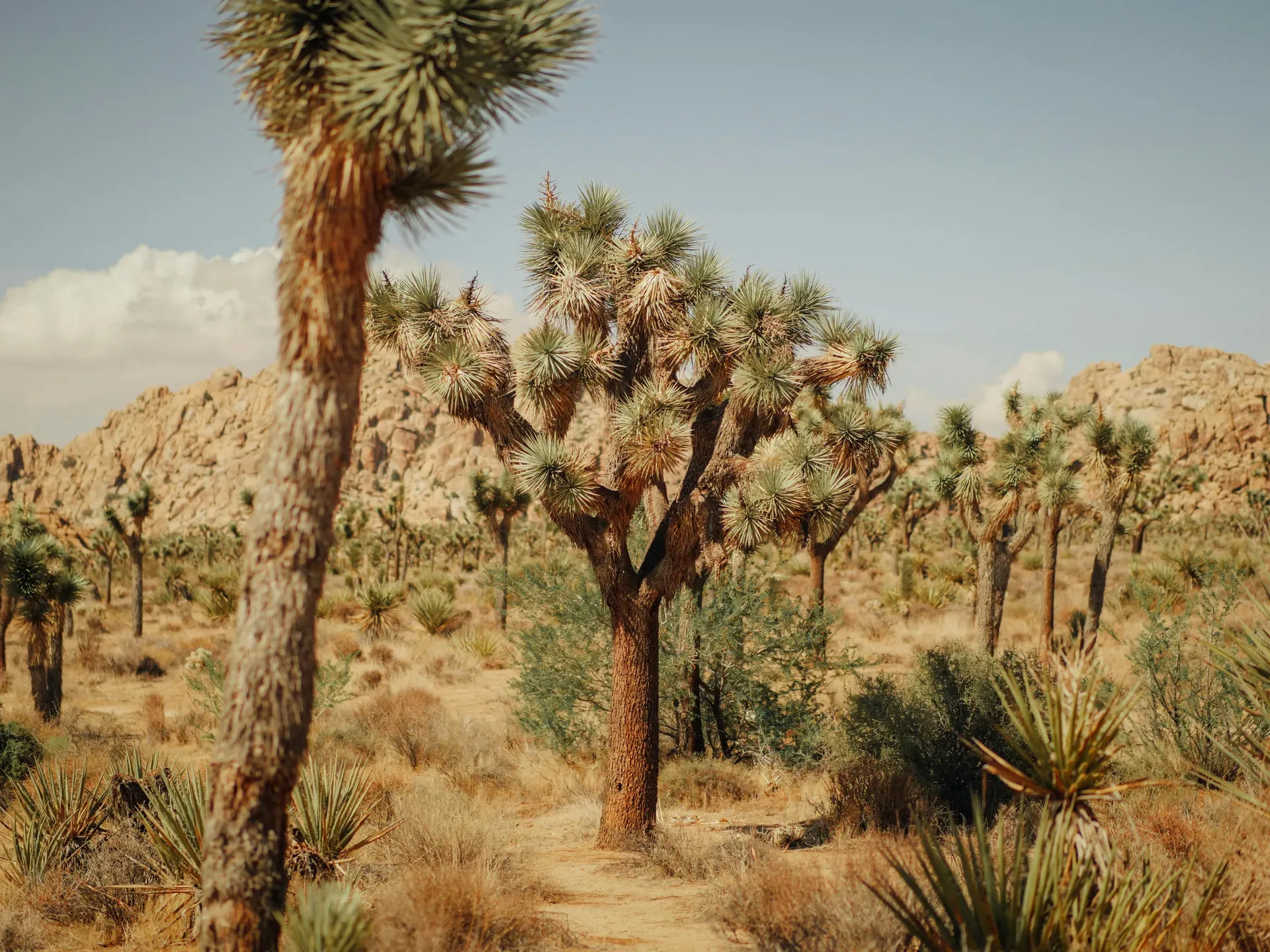
Spanning nearly 800,000 acres across southeastern California, the park unites the cooler Mojave and drier Colorado desert ecosystems. Visitors can scramble over massive monzogranite boulder formations, hike through a 10-acre landscape of teddybear cholla cacti, and explore over 700 protected archeological sites.
Find Guided ToursJoshua Tree National Park spans 792,623 acres in southeastern California, located east of San Bernardino and north of Palm Springs. The landscape is defined by the convergence of two distinct desert ecosystems: the higher, cooler, and wetter Mojave Desert and the lower, drier Colorado Desert. This transition zone supports rich biological diversity, including 813 higher plant species, over 250 bird species, and critical habitat for threatened animals like the desert tortoise. Elevations across the park vary drastically, rising from a low of 536 feet at the southeast boundary to 5,814 feet atop Quail Mountain.
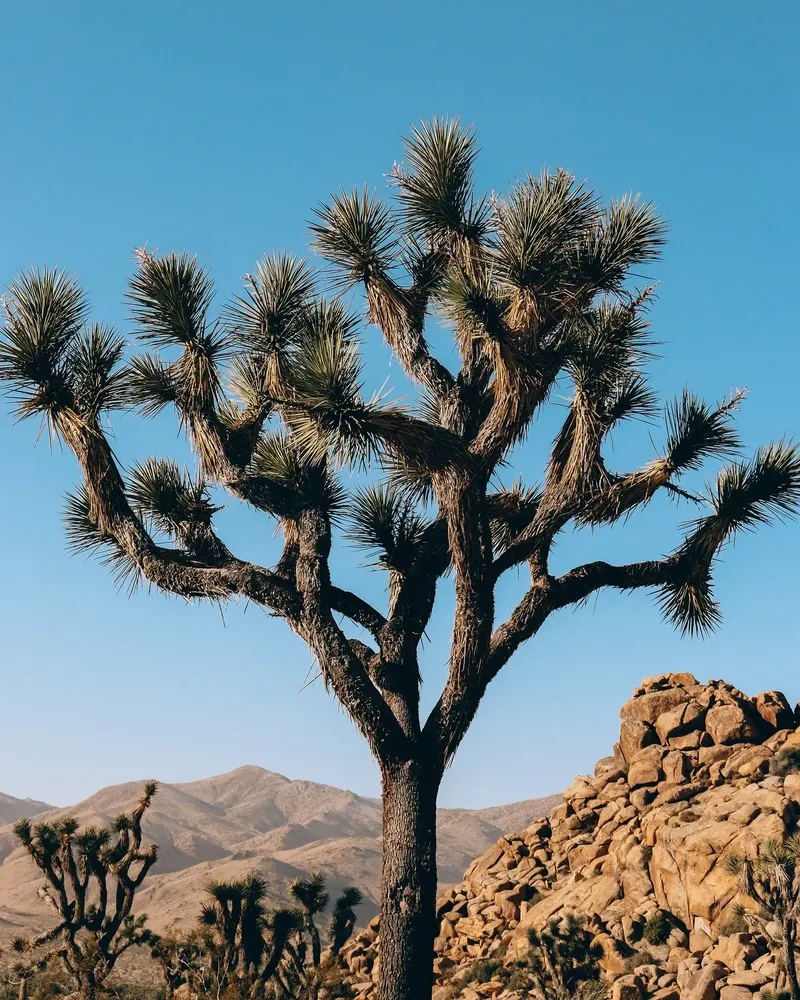
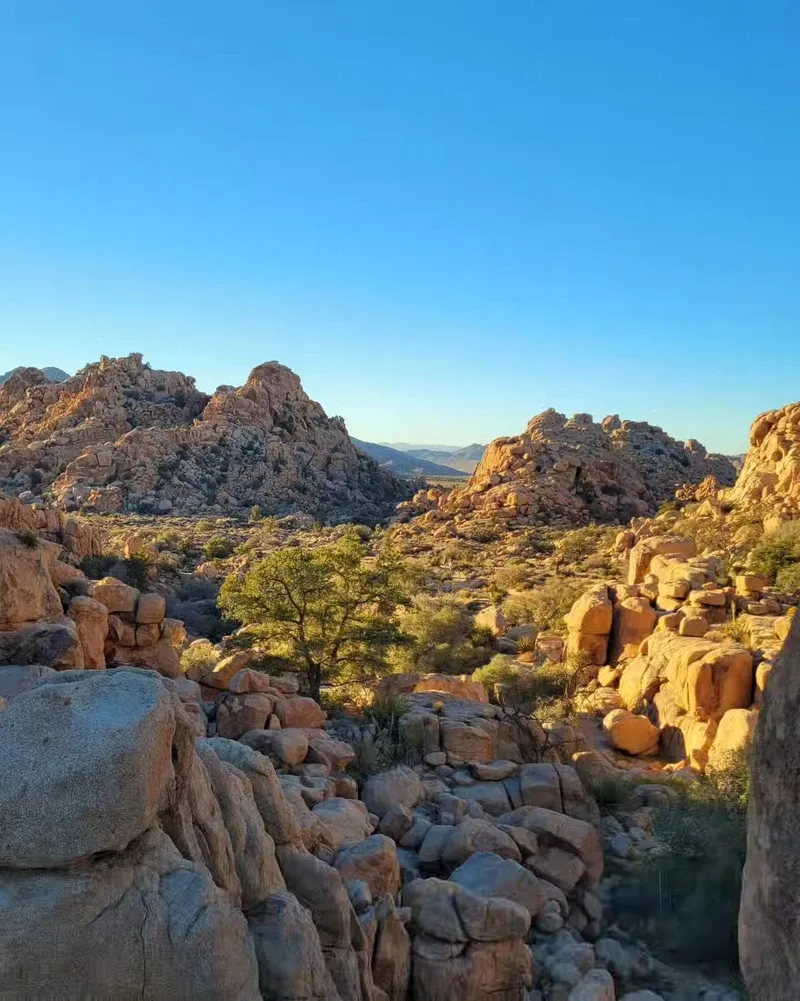
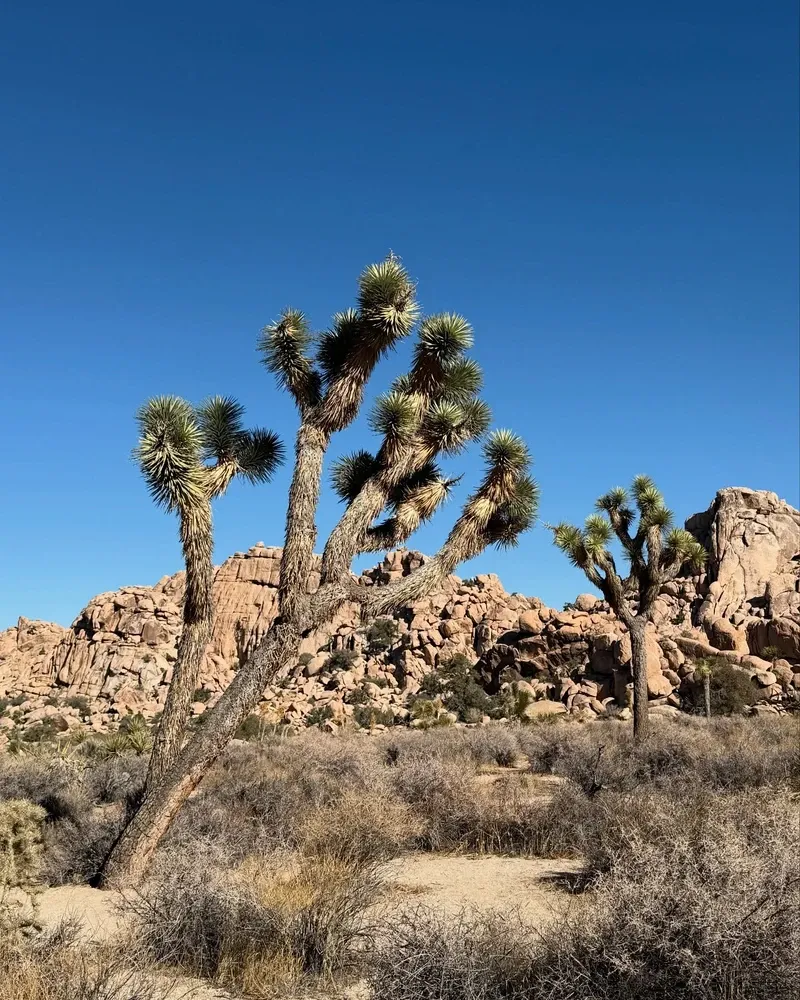
The park is highly recognized for its undisturbed population of its namesake Joshua trees (Yucca brevifolia) and its massive monzogranite boulder formations. These geological features were born over 100 million years ago, while the park's oldest rocks, the Pinto Gneiss, date back 1.7 billion years. Alluvial fans, bajadas, and scattered boulder piles define the rugged terrain across six distinct mountain ranges, including the Cottonwood, Pinto, Eagle, and Coxcomb Mountains. Beyond its terrestrial features, the area holds a designation as an International Dark Sky Park, protecting its night skies from light pollution.
Human habitation in the Joshua Tree region extends back at least 10,000 years. The hunter-gatherers of the Pinto Culture lived in this area between 8000 and 4000 BCE. Thousands of years later, in 1772, a group of Spaniards led by Pedro Fages recorded the first European sighting of the distinctive Joshua trees. Today, the park preserves over 700 archeological sites and 88 historic structures, documenting millennia of human adaptation to the harsh desert environment.
Modern protection of the landscape began in the late 1920s when Pasadena resident Minerva Hoyt campaigned to stop poachers from removing desert plants. Her efforts resulted in the 1936 establishment of Joshua Tree National Monument, which initially protected 825,000 acres. On October 31, 1994, President Bill Clinton signed the California Desert Protection Act, officially elevating the monument to a national park and securing 591,624 acres as designated wilderness.
Discover the full history and cultural significance on our About page.
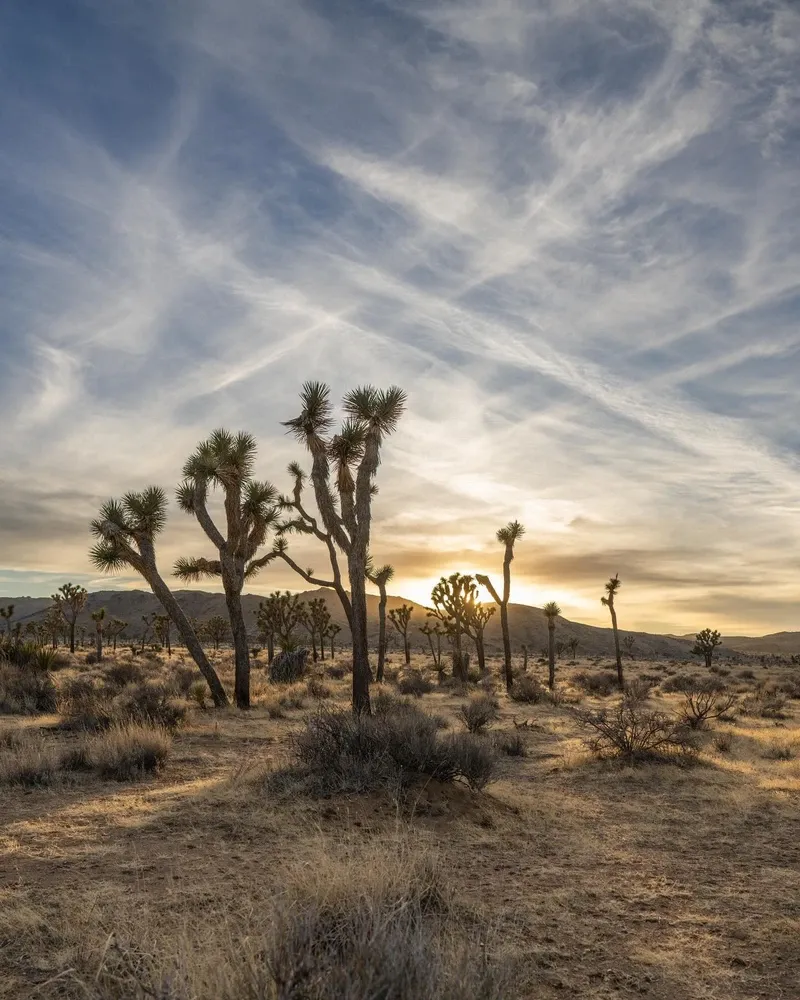
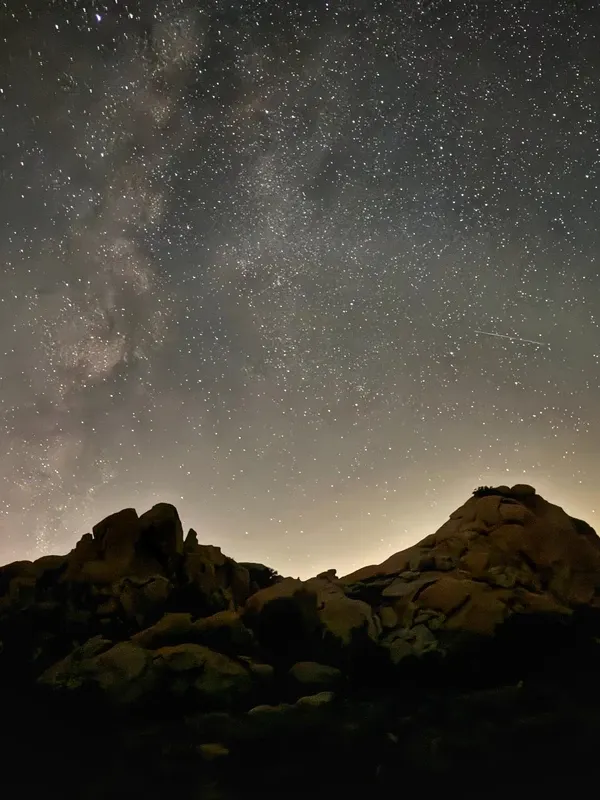
Joshua Tree holds an International Dark Sky Park designation, providing exceptionally clear night skies. Park at designated lots along Pinto Basin Road to view the Milky Way. The pitch-black environment allows visitors to observe countless stars across the nearly 800,000-acre protected landscape.
A flat trail winds through a dense 10-acre landscape filled with thousands of teddybear cholla cacti. Arriving one hour before sunset illuminates the spiky plants in golden light. Stay strictly in the center of the path to avoid the sharp, easily detached jumping cactus segments.
This scenic one-mile loop navigates through massive monzogranite boulders and diverse desert terrain. Hikers can watch rock climbers scale the rugged cliffs and explore a valley historically used as a hideout for cattle rustlers. The easy path is suitable for children as young as four.
Driving up to this mountain overlook brings visitors to an elevation exceeding 5,000 feet. The vantage point delivers panoramic vistas across the vast Coachella Valley. On clear days, you can spot the San Andreas Fault line and gaze all the way to Mexico.
Hand-picked tours with free cancellation and verified reviews
 Free Cancellation
  Free Cancellation
  Free Cancellation 5h
  Free Cancellation
  Free Cancellation 5h
  Free Cancellation
  Free Cancellation 2h
  Free Cancellation
 The best time to visit Joshua Tree National Park is from October to May, spanning the fall and spring seasons. During these months, daytime temperatures range from 70 to 85°F, creating ideal conditions for hiking and rock climbing.
Spring offers comfortable daytime highs between 70 and 85°F alongside beautiful wildflower blooms. This season is ideal for hiking and climbing, though weekends and holidays become extremely crowded.
Extreme heat makes summer dangerous for visitors, with daytime temperatures regularly reaching 100°F in July and August. Hiking is highly discouraged during the day due to severe dehydration risks.
Autumn provides excellent conditions for exploring the park, with daytime temperatures cooling to a comfortable 70 to 85°F. These months are highly recommended for outdoor recreation like rock climbing.
Winter falls within the park's optimal visitation window, offering cooler daytime temperatures and less crowded mid-week trails. Visitors must pack warm layers, as nighttime temperatures frequently drop near freezing.
Joshua Tree National Park is open 24 hours a day, 365 days a year, allowing visitors to enter and exit at any time. Visitor center hours vary by location. The Joshua Tree Visitor Center operates daily from 7:30 am to 5:00 pm, while the Twentynine Palms location is open daily from 8:00 am to 5:00 pm. The Cottonwood Visitor Center runs daily from 8:30 am to 4:00 pm. The Black Rock Nature Center operates from 8:00 am to 4:00 pm daily with a midday closure from 11:00 am to 12:00 pm; during summer (June 1 to August 28), it shifts to Thursday through Sunday from 9:00 am to 4:00 pm.
| Category | Price |
|---|---|
| Private Vehicle (7-day permit) | $30.00 |
| Motorcycle (7-day permit) | $25.00 |
| Per Person on Foot or Bicycle (7-day permit, age 16+) | $15.00 |
| Non-commercial groups in vehicles with 16+ capacity | $15.00 per person |
| Children under 16 | Free |
| Joshua Tree National Park Annual Pass | $55.00 |
| US Military Veterans and Gold Star Families | Free |
Visitors can purchase park passes online in advance at recreation.gov to reduce wait times at entrance stations. Entrance fees are waived on designated fee-free days throughout the year, but camping fees still apply.
For complete schedules and ticket prices, visit our Hours & Fees page.
Joshua Tree National Park is accessible primarily by car via Interstate 10 and Highway 62. Public transportation is extremely limited, making a rental vehicle the most practical choice for visitors.
Palm Springs International Airport is the closest aviation hub to the park. Drivers should take Interstate 10 West and connect to Highway 62 East. This route leads directly into the town of Joshua Tree and the park's West Entrance. Renting a car is highly recommended since public transportation remains extremely limited. The 40-mile drive typically takes one hour.
Travelers arriving at Los Angeles International Airport face a 150-mile drive to the park. The route heads east along Interstate 10 before connecting to Highway 62. This highway provides direct access to the park's northern entrances. Because the drive crosses the entirety of Los Angeles, visitors should avoid traveling during weekday business hours. Proper timing prevents severe traffic delays.
Public transportation directly into Joshua Tree National Park is highly limited. Visitors attempting this route must rely on the Morongo Basin Transit Authority. Travelers should check the official MBTA website for current local bus schedules. These routes operate primarily within the surrounding local communities rather than the park interior. A rental vehicle remains the most reliable alternative.
For detailed transport options and routes, visit our Directions page.
There is absolutely no water available in the park's interior. Visitors must carry at least one gallon of water per person each day. If you enter through the West Entrance, fill your containers at the visitor center. This is your final opportunity to secure fresh water before driving inside.
Cell phone reception is generally unavailable across the park's 792,623 acres. Download maps and offline navigation guides on the NPS app before arriving. Relying on live GPS units can lead vehicles into deep ruts or soft sand. Always carry a physical map and stay on established, paved roads.
Wait times at the entrance stations get exceptionally long during the peak October to May season. You can significantly reduce delays by purchasing your $30 standard 7-day vehicle pass online at recreation.gov in advance. Have the digital or printed pass ready when you approach the gate.
Desert temperatures fluctuate dramatically and drop rapidly at night. Winter evenings often fall near or below freezing. Pack warm clothing and dress in layers if you plan on stargazing or staying after sunset. Sturdy closed-toe shoes are also essential for navigating rocky trails and avoiding cactus spines.
The Cholla Cactus Garden features deceptively sharp plant segments that easily detach and stick to skin or clothing. Always stay in the center of the designated paths. Watch your step closely around these hazards. You should also carry tweezers in your first-aid kit to safely remove any rogue spines.
Weekends and holidays draw massive crowds between October and May. Plan your trip for a Tuesday or Wednesday to avoid heavy traffic and packed parking lots. Mid-week visits provide much more quiet space on popular, easy routes like the one-mile Hidden Valley Nature Trail.
Originally constructed in the 1940s as an 1880s Old West movie set, this historic town retains its vintage wooden facades. Visitors can browse artisan shops and eat barbecue at Pappy + Harriet's.
This free, self-guided outdoor museum displays large-scale assemblage sculptures constructed entirely from discarded materials. The installations stand directly against the stark desert landscape, providing a highly unusual artistic perspective.
Known for its mid-century modern architecture, this resort city features boutique hotels and luxury spas. Travelers can also ride the famous aerial tramway up into the towering, snow-capped cliffs.
Read what travelers share about their experience visiting Joshua Tree — from practical tips to personal highlights.
A standard 7-day vehicle pass costs $30.00, while motorcycles enter for $25.00 and individuals on foot or bicycle pay $15.00. Children under 16 enter for free, and an annual park pass is available for $55.00.
The most comfortable months to visit are between October and May, when average daytime highs range from 70 to 85°F. Summer months like July and August should be avoided due to dangerous heat, with temperatures frequently reaching 100°F.
The park remains open 24 hours a day, 365 days a year. Visitors can drive in and out at any time, and the gates stay open at night for stargazing even when entrance stations are unstaffed.
Palm Springs International Airport (PSP) is the closest option, located 40 miles away with a driving time of about one hour. Los Angeles International Airport (LAX) is 150 miles away and takes roughly two and a half hours, depending on weekday traffic. Renting a car is highly recommended due to limited public transportation.
Yes, there is absolutely no water available in the park's interior. You must carry at least one gallon of water per person per day to prevent dehydration. Visitors entering through the West Entrance should fill containers at the visitor center before driving in.
Yes, the park features several accessible routes, including the flat half-mile Oasis of Mara loop and the Lower Keys Overlook. The Cap Rock Nature Trail is also a mostly level 0.3-mile dirt loop with accessible parking and picnic tables.
Nearly 85% of the park's 500-plus campsites are available by reservation only. You must book these sites in advance through recreation.gov. Reservations open up to six months ahead of time and fill up rapidly on weekends.
Pets are strictly prohibited on all trails and paths inside the park to protect native wildlife. They must remain on a leash at all times and cannot go more than 100 feet from any road.
Browse verified tours with free cancellation and instant confirmation.
Find Tours